
【国際シンポジウム開催報告】International Symposium Resilience of Sea Peoples in Southeast Asia and Oceania
2026.2.1
お知らせ日本語研究活動
【開催報告】国際シンポジウム:Resilience of Sea Peoples in Southeast Asia and Oceania: Comparative Studies and Dialogue with Practitioners of the Tsunami-Affected Sanriku Region in Japanを開催しました
1. はじめに
2026年1月30日(金)から31日(土)の2日間にわたり、東洋大学白山キャンパス(東京)およびオンライン配信にて、国際シンポジウム: Resilience of Sea Peoples in Southeast Asia and Oceania: Comparative Studies and Dialogue with Practitioners of the Tsunami-Affected Sanriku Region in Japan「東南アジア・オセアニアにおける海民のレジリエンス――地域間比較および三陸津波被災地の実践知識人との対話」を開催いたしました。
本シンポジウムは、人類学・歴史学・地域研究を専門とする国内外の研究者に加え、2011年の東日本大震災で巨大な津波被害を受けた三陸地域で復興を支えてきた在地の実務家が一堂に会する貴重な機会となりました。当日は対面・オンラインを合わせて200名を超える皆様にご参加いただき、盛況のうちに全プログラムを終了いたしました。
開催にあたりご支援・ご助成をいただきました「りそなアジア・オセアニア財団」、人間文化研究機構グローバル地域研究推進事業「海域アジア・オセアニア研究プロジェクト(NIHU-MAPS)」、特別集会としてご承認いただいた「日本東南アジア学会(JSSEAS)」、ならびに支援をいただいた「東洋大学アジア文化研究所(ACRI)」に対し、深く感謝申し上げます。また、ご登壇いただいた方々、ご参加いただいたすべての皆様に心より御礼申し上げます。
2. 開催概要
■日時:2026年1月30日(金)〜1月31日(土)
■開催形態:ハイブリッド開催(東洋大学 + オンライン配信)
■主催・助成:
- 一般財団法人 りそなアジア・オセアニア財団(国際学術交流助成)
- 大学共同利用機関法人人間文化研究機構・グローバル地域研究推進事業「海域アジア・オセアニア研究プロジェクト」(NIHU-MAPS)
■承認・支援:
- 日本東南アジア学会(JSSEAS)特別集会
- 東洋大学 アジア文化研究所(ACRI)
■参加者数:延べ200名以上(対面・オンライン合計)
■シンポジウムの趣旨:
環太平洋地震帯の西側に位置する東南アジアやオセアニアの島嶼域は、繰り返し沿岸災害に直面してきました。近年では地球温暖化に伴う海面上昇や土地浸食も深刻化しています。これらの地域に暮らすバジャウ人、オラン・ラウト、モーケン人、ソロモン諸島のラウ人などの「海民」は、政治的な周縁化や過酷な沿岸被害を経験しながらも、海辺に留まり続け、独自の生活世界を再建する強靭さ(レジリエンス)を発揮してきました。
本シンポジウムでは、こうした東南アジア・オセアニアの周縁的海民における自然との関わりやレジリエンスを比較討議するとともに、東日本大震災・津波の被害を受けた三陸・気仙沼の実践知識人を招き、復興の知と経験を共有しました。研究者と実践者が対話を重ねることで、沿岸に住み「海とともに生きること」の地域的な思想と、地域を超えた普遍的な知恵を探ることを目指しました。
3. プログラム
【Day 1:2026年1月30日(金)】
10:30-10:40 | Welcome and Introductory Remarks
Session 1: Sea Peoples and Nature: Perspectives from the Next Generation
Chair and Moderator: Yuki Suzuki (Kokushikan University)
10:40-11:00 | Was it a “Disaster”? The Experience of the Sama-Bajau People in Banggai Islands, Indonesia
By Makibi Nakano (Konan Women’s University)
11:00-11:20 | From Home-seas to Urbanities: The State of the Sama-Bajaus across the Philippines amidst Socio-Ecological Changing Realities
By Amiel Jay Lopez (Ateneo de Davao University)
11:20-11:40 | Political Ecology of Marginalization: Sea Nomad Resilience Against Coastal and Marine Extraction in Southeast Asia
By Wengki Ariando (KITLV: Royal Netherlands Institute of Southeast Asian and Caribbean Studies)
11:40-12:00 | Living with Disasters: A Case Study of Guadalcanal, Solomon Islands
By Shinichi Fujii (National Museum of Ethnology)
12:15-12:30 | Comments: James F. Warren (Murdoch University)
12:30-13:00 | Discussion
第1セッションのようす
Keynote Speech(基調講演)
Title: In Search of Consilience: Thomas Forrest, the MaKaturing Eruption circa 1762-65, and the Rise of the Iranun
By Prof. James F. Warren (Murdoch University)
本基調講演では、歴史学と自然科学(火山学・気候学・地質学など)を横断する超学術的・超文化的なアプローチが提示されました。18世紀半ばミンダナオ島のマカトゥリン山噴火とイラヌン人の台頭を事例に、歴史的記録(文献)と自然の記録(地質データ等)を統合し、自然災害が社会・経済・政治史に与えた影響と、人間のレジリエンスのパターンを解明する新たな手法について力説されました。
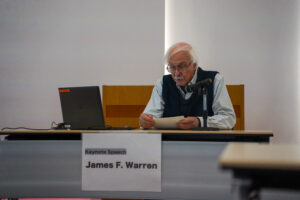
基調講演でお話されるウォレン先生
Session 2: Dynamics of Human-Environment Interactions among Sea Peoples
Chair and Moderator: Fujii Shinichi (National Museum of Ethnology)
14:50-14:55 | Introduction
By Fujii Shinichi (National Museum of Ethnology)
14:55-15:15 | On Indigenous Resilience: The Orang Suku Laut
By Cynthia Chou (University of Iowa)
15:15-15:35 | Boat as a Nexus Linking Maritime Societies and the Environment: A Case Study of the Moken in the Andaman Sea, Thailand
By Yuki Suzuki (Kokushikan University)
15:35-15:55 | Perception of the Globally Changing Environment among Vezo Fishers of Madagascar
By Taku Iida (National Museum of Ethnology)
16:10-17:00 | Discussion
第2セッションのようす
18:10-20:00 | Reception
【Day 2:2026年1月31日(土)】
Session 3: Vernacular Meanings of Living on the Sea
Chair and Moderator: Hisashi Shimojo (Kobe University)
10:30-10:35 | Introduction
By Hisashi Shimojo (Kobe University)
10:35-10:55 | The Bajau’s Art of Not Being Subjugated in the Wallacean Sea
By Kazufumi Nagatsu (Toyo University)
10:55-11:15 | Bajau Laut of Sabah Made Invisible via Institutionalised Knowledge Production about Social and Environmental Threats
By Fadzilah Majid Cooke (Independent Scholar) and Greg Acciaioli (The University of Western Australia)
11:15-11:35 | The Origin of Lau and the Influence of Polynesian Outliers in the Solomon Islands: Reflections from Oral History
By Daisuke Takekawa (The University of Kitakyushu)
11:50-12:40 | Discussion
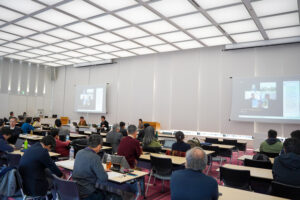
第3セッションのようす
Session 4: Dialogue with Practitioners of the Sanriku Region: Resilience of Coastal Communities after the 2011 Tohoku Earthquake and Tsunami and its Implications for Southeast Asia and Oceania
Chair and Moderator: Tsukiko Myojo (JSPS / Toyo University)
13:40-13:45 | Introduction
By Kazufumi Nagatsu (Toyo University)
13:45-14:10 | Seawall and Civic Engagement: A Challenge in Post-Tsunami Beach Recovery on the Oya Coast of Kesennuma
By Tomoyuki Miura (Project Rias, Kesennuma)
14:10-14:35 | Community Resilience Beyond Seawalls: Post-Tsunami Recovery, Coastal Protection, and Environmental Conservation in Kesennuma-Moune
By Makoto Hatakeyama (NPO Mori wa Umi no Koibito, Kesennuma)
14:35-14:55 | From Recovery to Resilience: Post-tsunami and Post-Covid Lifeways of the Moken in Thailand
By Narumon Arunotai (Chulalongkorn University)
14:55-15:15 | Bridging Three Decades of Discourse and Reality: Community-Based Coastal Management in Maluku and Papua, Indonesia
By Dedi Adhuri (National Research and Innovation Agency, Indonesia)
15:30-15:40 | Comments 1: Takuro Furusawa (Kyoto University)
15:40-15:50 | Comments 2: Hironao Kawai (Tokyo Metropolitan University)
15:50-16:30 | Round Table Dialogue
本セッションでは、宮城県気仙沼の実践者より、ご自身の被災経験や復興過程での地域の共同や交渉など大変貴重なお話を共有いただき、震災からの復興における成功と課題、地域の知恵が語られました。後半のラウンドテーブルでは、研究者の視点と実践者の視点の双方から活発な議論が行われ、過酷な自然災害に直面しながらも「海とともに生きる」という生き方の根底にある思想を探りました。
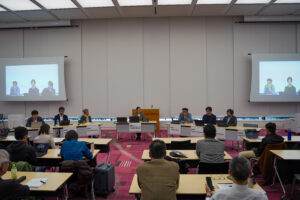
第4セッションのようす
16:30-16:45 | Summary and Wrap-up
16:45-16:50 | Closing Remarks
4. 総括
今回のシンポジウムでは、学術的な知見と地域での実践的な知恵が交差し、極めて多角的な議論が展開されました。東南アジアやオセアニアの海民が培ってきた環境適応力や社会的自立の工夫は、日本の三陸地域における津波からの復興プロセスや「海とともに生きる」思想とも深く響き合うものでした。
自然災害や環境変化が世界規模で激化する現代において、周縁化されつつも海辺でたくましく生き抜いてきた人々のヴァナキュラーな知恵に学ぶことは、将来の災害リスクに対するコミュニティのレジリエンス(回復力・強靭性)を高めるうえで極めて重要な示唆を与えてくれます。
5. おわりに
本シンポジウムでの討議成果や知恵の共有を第一歩として、当プロジェクトでは今後も東南アジア・オセアニア・日本の沿岸地域を繋ぐネットワークを拡張し、比較研究と対話を継続してまいります。
知と実践を架橋し、「海とともに生きること」の普遍的な意味を世界に向けてさらに発信していく予定です。今後の研究成果の公表や次回イベントにつきましても、本ウェブサイトにて随時ご案内いたします。
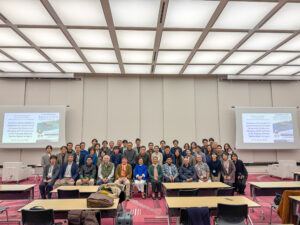
※本記事掲載写真の無断転載はご遠慮ください。